
How does Digital SAT Scoring work in 2025?
The SAT is now digital, shorter, and adaptive. Starting in 2025, the SAT transitioned to a fully digital format with a 2-hour 14-minute test duration. It uses adaptive testing, where the difficulty of questions adjusts based on your performance. Scores still range from 400 to 1600, with section scores for Reading and Writing and Math between 200 and 800 each.
Key Updates:
- Adaptive Scoring: Your performance in the first module determines the difficulty of the second module.
-
Scoring Breakdown:
- Reading/Writing: Max score depends on module difficulty (e.g., fewer errors = higher max score).
- Math: Similar adaptive scoring applies.
- Faster Results: Digital format speeds up score processing.
- Improved Security: Every student gets a unique test form.
Quick Scoring Examples:
- For Reading/Writing: If you do well in Module 1, you can achieve up to 800 in Module 2.
- For Math: Making 10 errors in Module 1 caps your score at 680, even with perfect Module 2 performance.
The digital SAT is designed to reduce stress with shorter passages, calculator use throughout Math, and faster results. Tools like ChatSAT help you prepare by simulating the adaptive format and analyzing your performance.
Digital SAT Study Guide: How the Scoring Algorithm Works
Digital SAT Format
Starting in 2025, the digital SAT introduces a personalized testing approach. It adjusts question difficulty in real time while maintaining high assessment standards.
Test Sections
The digital SAT is divided into two main sections: Evidence-Based Reading and Writing and Math. In the Reading and Writing section, students answer questions based on passages to evaluate their comprehension and analytical skills. The Math section includes both multiple-choice and short-answer problems.
This format uses a two-phase structure that adapts to individual performance levels.
2-Stage Question System
The test follows a Multi-Stage Testing model with two modules in each section:
-
Module 1 (Initial Assessment)
This module provides a range of questions to gauge the student's baseline abilities. -
Module 2 (Adaptive Assessment)
Questions in this module are tailored based on how the student performed in Module 1. Students who perform well face more challenging questions, while others receive questions better aligned with their skill level.
Score Calculation Methods
The digital SAT takes your raw score - the number of correct answers - and converts it using an algorithm that adjusts based on question difficulty.
Converting Raw to Scaled Scores
Raw scores (up to 54 for Reading and Writing, and 44 for Math) are converted into scaled scores ranging from 200 to 800. This statistical process ensures fairness and consistency across different test versions.
"Digital SAT scoring provides a clear measure of academic skills in Reading, Writing, and Math, helping students understand their performance and prepare focused study plans." - Hazel Ricky, Content Marketing Associate
Question Difficulty and Points
Your performance in the first module determines the difficulty of the second module, which directly affects your maximum possible score.
Reading and Writing Scoring:
| Module 1 Errors | Module 2 Level | Maximum Score |
|---|---|---|
| 0-10 | Higher | 800 |
| 11+ | Lower | 560 |
Math Scoring:
| Module 1 Errors | Module 2 Level | Maximum Score |
|---|---|---|
| 0-10 | Higher | 680 |
| 11+ | Lower | 560 |
Examples:
- For Reading and Writing: Missing one question in a harder second module results in a score close to 770.
- A perfect second module after one error in Module 1 can still achieve 800.
- In Math: Making 10 errors in Module 1 but performing perfectly in the harder second module caps your score at 680.
This scoring method emphasizes consistent accuracy. Strong performance in the second module is key to reaching the highest scores.
sbb-itb-a0f4a21
Score Quality Control
The digital SAT has strong quality control measures in place to ensure scores accurately represent students' abilities while maintaining the test's integrity. Below are details about its security features.
Security Features
The digital SAT includes features designed to prevent cheating and promote fairness. According to the College Board:
"Going digital allows us to give every student a unique test form, so it will be practically impossible to share answers." - SAT Suite | College Board
Key Security Feature:
| Security Feature | Purpose |
|---|---|
| Unique Test Forms | Every student gets a different set of questions, making answer sharing nearly impossible. |
Reading Your Score Report
Your digital SAT score report helps you understand your performance and assess your readiness for college. It highlights your academic strengths and areas where you might need improvement.
Score Details and Breakdown
The report divides your performance into two main sections: Reading and Writing and Math. Scores for these sections range from 200 to 800, combining for a total score range of 400 to 1600. Here's how the key components are structured:
| Score Component | Description | Score Range |
|---|---|---|
| Total Score | Sum of Reading/Writing and Math scores | 400–1600 |
| Section Scores | Scores for Reading/Writing and Math sections | 200–800 each |
| Percentile Rankings | How your performance compares to others | 1st–99th percentile |
Percentile rankings give you a sense of how you stack up against other test-takers. For example, being in the 75th percentile means you scored higher than 75% of students who took the test. Beyond just numbers, the report also points out indicators of how well-prepared you are for college.
Indicators for College Readiness
The score report includes tools to gauge your readiness for first-year college courses. These indicators offer a general idea of whether your performance meets college-level expectations.
To better understand your scores, you can use the official College Board score conversion tables. These tables explain how raw scores are converted into scaled scores. This can help you pinpoint areas where additional study might boost your scores on future exams.
Practice with ChatSAT
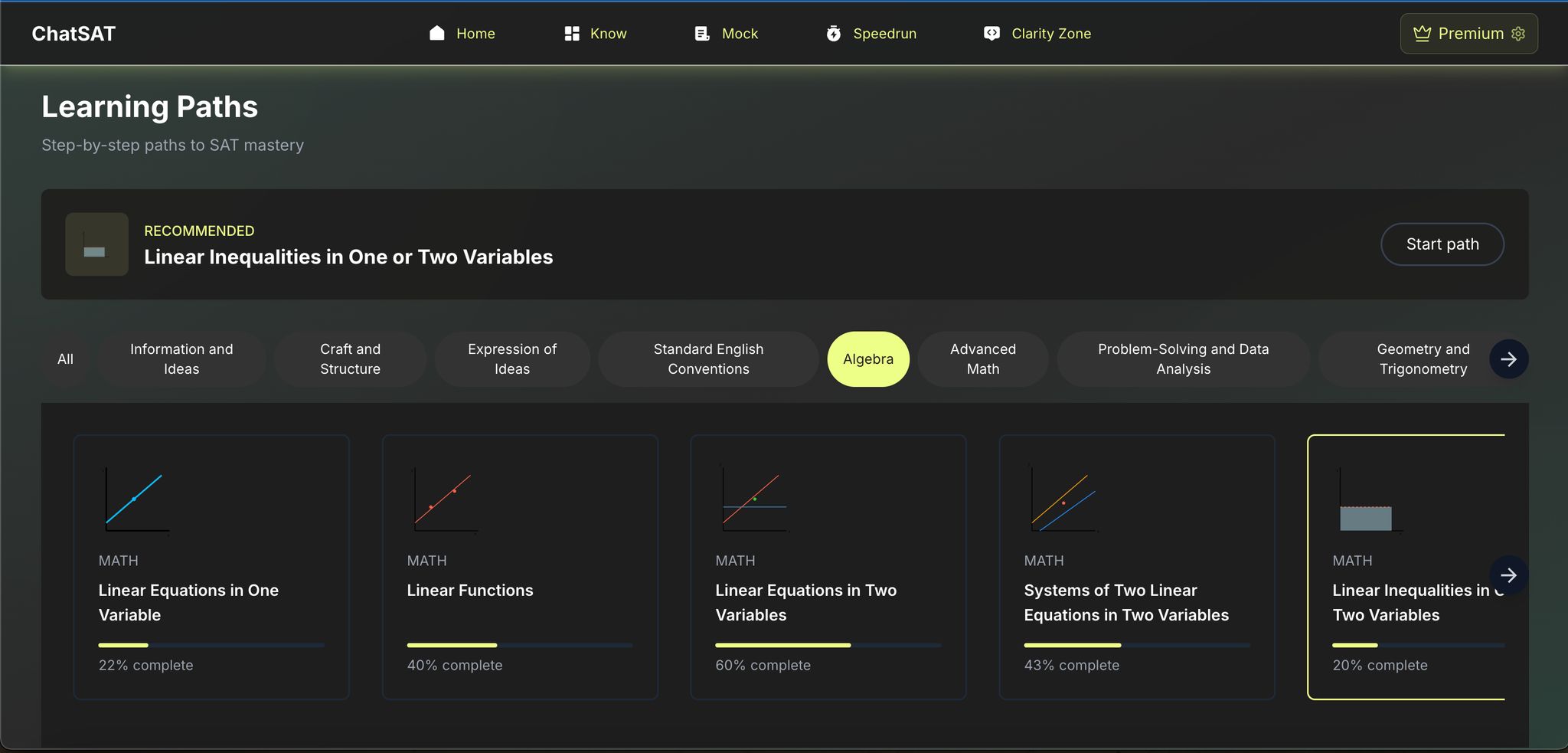
Getting comfortable with the adaptive scoring system starts with focused practice.
Practice Test System
ChatSAT's adaptive practice tests mirror the official digital SAT's two-module structure, adjusting difficulty in real time. You can also take topic-specific practice tests, allowing you to zero in on particular content areas while still experiencing the adaptive format. This method helps you see how different types of questions impact your score and how difficulty levels shift across subject areas. These tests are designed to get you ready for the challenges of the actual exam.
Score Analysis Tools
ChatSAT’s analytics dashboard gives you a clear breakdown of your performance. It highlights key metrics like:
| Performance Metric | What It Shows | How It Helps |
|---|---|---|
| Topic Mastery | How well you perform in specific areas | Pinpoints strengths and areas to improve |
| Difficulty Progression | Success rates at various question levels | Prepares you for tougher Module 2 questions |
| Time Management | Speed and accuracy statistics | Helps refine pacing strategies |
The Smart Review System goes a step further, analyzing missed questions to explain why errors happened and how they influence your score.
Performance Tips
Using these insights, ChatSAT's AI Study Director provides real-time advice on tackling questions, managing time, and understanding errors:
- Focus your time on high-value questions and make strategic guesses when needed.
- Maintain a balance between speed and accuracy as questions get harder.
- Avoid common mistakes by recognizing patterns in your errors.
For extra support, the platform’s 24/7 query resolution system ensures you can quickly get answers to your questions about scoring, helping you feel more confident with the adaptive format.
Summary
The digital SAT keeps the familiar 400–1600 scoring range, with Reading/Writing and Math sections each scored between 200–800. Using adaptive testing technology, the exam adjusts question difficulty based on how well you perform .
Understanding how the scoring works is crucial. Your performance in the earlier modules determines the difficulty - and ultimately the scoring potential - of the later sections. Even small mistakes early on can impact your final score significantly.
ChatSAT's adaptive practice system helps you get a handle on these scoring dynamics by offering:
| Feature | How It Helps | Impact on Your Score |
|---|---|---|
| Real-time Difficulty Adjustments | Simulates actual test conditions | Prepares you for smooth module transitions |
| Performance Analytics | Tracks your strengths and timing | Pinpoints areas where you can improve most |
| Smart Review System | Examines your error patterns | Helps you avoid losing points on common mistakes |
This feedback highlights why understanding adaptive scoring is key to improving your results.
With seven test dates available each year, you have several chances to hit your goal. Use ChatSAT's tools to sharpen your skills, navigate test transitions, and boost your score.