
How to Go from 1400 to 1550 Without Burning Out
Boosting your SAT score from 1400 to 1550 is possible without overworking yourself. Here’s how:
- Fix Careless Mistakes: Track errors in a journal and double-check answers.
- Master Time Management: Practice under timed conditions and learn when to skip tough questions.
- Tackle Tough Questions: Focus on weak areas like advanced math or reading comprehension.
- Protect Mental Health: Stick to a study schedule with breaks, get 8+ hours of sleep, and stay active.
Use tools like ChatSAT for tailored practice and detailed feedback. Prioritize quality study sessions over long hours, and focus on progress, not perfection.
How to Get 1550+ on the SAT Without Tutor (How I Got a 1570 ...
Check Your Current Scores
Before diving into intensive SAT prep, it's important to evaluate where you currently stand. Knowing your strengths and weaknesses allows you to focus your efforts on areas that need improvement - without overworking yourself.
Review Section Scores
Go beyond looking at your overall SAT practice test score. Break it down by question type and topic to get a clearer picture of your performance.
Here’s a simple approach to analyzing your scores effectively:
- Keep a Mistakes Journal: Track every question you’re unsure about, even if you got it right. This helps uncover areas where lucky guesses might be masking uncertainty.
- Categorize Your Mistakes: Label each error based on its cause. Common categories include:
| Error Type | Example | Fix It With |
|---|---|---|
| Vocabulary Issues | Struggling with unfamiliar words | Build flashcards for tough words |
| Time Management | Rushing through the last questions | Practice under stricter timers |
| Careless Errors | Skimming over key question details | Double-check your answers |
| Concept Gaps | Trouble with specific math concepts | Focused practice on weak topics |
- Spot Patterns: Count how often each type of mistake occurs. This will help you prioritize what to work on first. Tools like ChatSAT’s adaptive tests can also give you detailed insights into your performance.
Set Target Scores
Once you’ve identified your weak spots, set specific goals to guide your study plan. For example, if your overall goal is to jump from 1400 to 1550, break it into smaller, actionable steps.
Here’s a typical target breakdown for students aiming for a 1550:
| Section | Current Score (≈1400) | Target Score (1550+) | Focus Areas |
|---|---|---|---|
| Math | 700–720 | 780–800 | Advanced word problems, Data analysis |
| Reading/Writing | 680–700 | 750–770 | Careful reading, Time management |
For a more customized approach, ChatSAT’s AI Study Director can help craft a study plan tailored to your goals. As you improve, the system adjusts the difficulty of practice materials, ensuring you stay challenged without feeling overwhelmed.
Improve Study Methods
After reviewing your scores, take the next step by refining your study strategy. Focus on persistent problem areas and include timed practice in your routine. This approach can help you improve effectively while avoiding burnout.
Target Problem Areas
Use your mistakes journal to pinpoint patterns that consistently lead to lost points. By addressing these recurring issues, you can improve your performance and reduce unnecessary stress from repetitive studying.
Here’s a simple way to analyze practice test errors. Tag each mistake with a keyword to identify and address recurring problems:
| Error Type | Examples | Strategic Fix |
|---|---|---|
| Time Management | Running out of time on final questions | Practice with shorter time limits over time |
| Concept Gaps | Struggling with geometry formulas | Focus on specific core concepts during review |
| Reading Comprehension | Missing the author’s main point | Practice active reading techniques |
| Careless Errors | Misreading question details | Use a double-check system to catch mistakes |
Practice With Time Limits
Time management is key to achieving a 1550+ score. Gradually reduce your time limits during practice to simulate real test conditions.
For Math sections, consider these time guidelines:
| Section Type | Target Time per Question | When to Skip |
|---|---|---|
| No Calculator | 55 seconds | Skip if no solution comes to mind within 5 seconds |
| Calculator | 60 seconds | Skip if no solution comes to mind within 10 seconds |
Use ChatSAT Tools
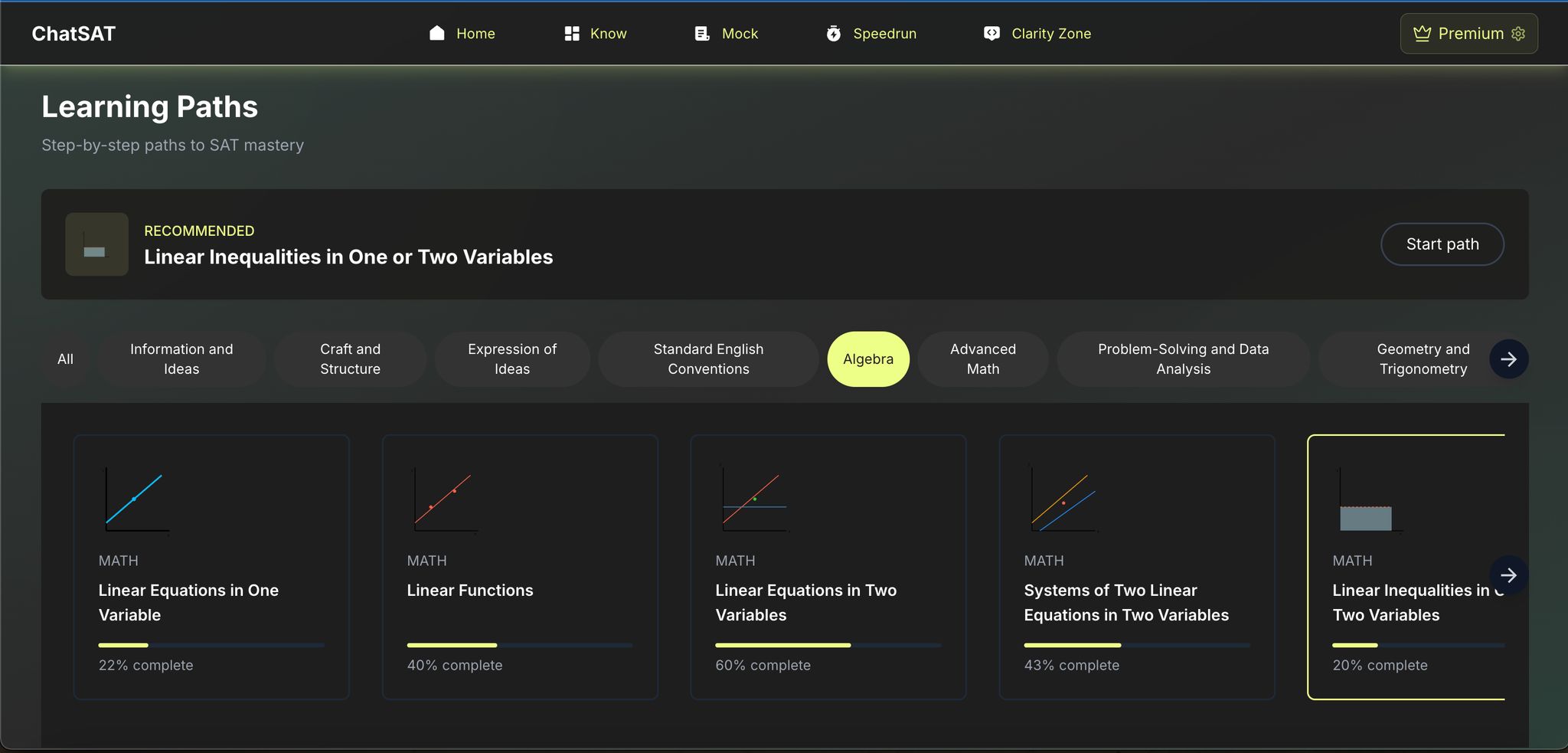
Once your pacing is on point, take advantage of tools like ChatSAT to enhance your preparation. ChatSAT’s AI Study Director uses your performance data to create a customized study plan, ensuring steady progress without overwhelming you.
Key features include:
- Adaptive Practice Tests: Focus on areas where you need improvement
- Smart Review System: Get detailed explanations for mistakes
- Performance Analytics: Monitor progress across question types
- Personalized Study Paths: Receive tailored recommendations based on error patterns
sbb-itb-a0f4a21
Avoid Study Burnout
Staying mentally sharp while targeting a 1550+ SAT score requires more than just practice - it calls for a balanced approach to manage your energy effectively. These strategies will help you stay focused without overloading your mind.
Create a Weekly Schedule
A structured study plan with built-in breaks can help you avoid fatigue and maximize productivity.
| Time Block | Duration | Activity Type | Break Type |
|---|---|---|---|
| Morning | 90 minutes | High-focus tasks | 15-minute outdoor break |
| Afternoon | 60 minutes | Practice problems | 10-minute movement break |
| Evening | 45 minutes | Light review | 20-minute relaxation |
Switching subjects - like going from Math to Reading - after breaks can keep your brain engaged and reduce monotony. A well-organized schedule ensures you stay on track while giving yourself time to recharge.
Get Enough Sleep
Good sleep is crucial for retaining information and performing well on test day. Research shows that about 25% of academic performance differences can be linked to sleep quality. To optimize your sleep during SAT prep, follow these tips from the National Sleep Foundation:
- Aim for 8–10 hours of sleep each night.
- Stick to a consistent wake-up time, even on weekends.
- Avoid caffeine within 10 hours of bedtime.
- Schedule exercise earlier in the day, not within 3 hours of going to bed.
"The consistency of sleep patterns may have a greater impact on GPA than sleep duration."
Pairing consistent sleep habits with regular breaks will help you maintain focus and energy.
Take Mental Breaks
Short, intentional breaks can solidify what you’ve learned and help prevent burnout. Medical student Zach Highley found that prioritizing his well-being improved his test results, even when he studied fewer hours. Here are some proven ways to make your breaks count:
- Change your environment during breaks to reset your focus.
- Try light physical activity like a quick walk, stretching, yoga, or deep breathing exercises.
- Spend at least one break outside daily to enjoy the benefits of fresh air and nature.
"We want to associate our studying with a study location and our relaxing with a relaxing place."
Get Ready for Test Day
Now that you’ve established a solid study routine and are managing your energy well, it’s time to focus on strategies for test day itself. These final preparations can make all the difference in achieving a top SAT score.
Take Practice Tests
Full-length practice tests under realistic conditions help build both stamina and confidence. Set up an environment that closely resembles the actual test day:
| Element | Simulation Details |
|---|---|
| Timing | Begin at 8:00 AM on a Saturday |
| Environment | Quiet room with a classroom-style desk |
| Materials | Approved calculator and pencils only |
| Breaks | Stick to official break durations |
| Duration | Complete the full 3-hour test |
After each test, review your results carefully. Pay close attention to the questions you missed or guessed on, as these highlight areas that need extra review.
Plan Your Time
Develop a strategy for pacing yourself during each section. For example, in the reading section:
- Spend about 15 seconds skimming each passage for main ideas
- Aim to read 80 words in 15 seconds or less
- Break longer, complex passages into smaller sections
- Save 2–3 minutes at the end to review your answers
Pairing smart pacing with physical readiness will help you perform at your best.
"Practice is easily one of the best ways to perform better on exam day." - Zach Highley
Take Care of Your Body
Your physical condition plays a big role in maintaining mental focus on test day. Even mild dehydration - just 2% - can affect cognitive performance. Follow these steps to prepare your body:
1. One Week Before
Test your routine: wear the clothes you plan to wear, travel to the test center, and time your route. This ensures there are no surprises.
2. The Day Before
- Get outside for 30 minutes of exercise
- Power down screens at least an hour before bed
- Keep your bedroom cool, dark, and quiet
- Take a hot shower before sleeping to relax
3. Morning Of
- Eat a breakfast rich in protein
- Drink 16 oz of water as soon as you wake up
- Arrive at the test center 30 minutes early
- Try a two-minute power pose to boost confidence
"We want to be in the middle of that upside-down U-shaped curve for stress. Too far to the right and our cognitive performance suffers." - Zach Highley
During breaks, close your eyes and take three deep breaths to reset your focus. Pack a protein bar and some fruit to keep your energy steady throughout the exam.
Copy Success Methods
Learn how high achievers refine their study methods to consistently score 1550+ on standardized tests. By adopting their strategies, you can hit your target score faster and avoid burnout.
Study Like Top Scorers
Top scorers focus on quality over quantity. Their approach relies on analyzing mistakes and practicing in a targeted way. Here’s how you can apply their methods:
| Strategy | How to Do It | What It Helps With |
|---|---|---|
| Mistake Analysis | Flag questions with about 20% uncertainty and carefully review wrong answers | Prevents repeating the same errors |
| Root Cause Review | Use the "Five Whys" technique to dig into why mistakes happen | Pinpoints underlying weaknesses |
| Targeted Practice | Concentrate on question types you frequently miss | Builds strength in weaker areas |
| Double-Check System | Highlight key parts of questions to ensure full understanding | Cuts down on careless errors |
Additionally, underline key details in questions, delay bubbling answers until the end, skim passages effectively, and avoid overthinking Reading section questions.
While personalizing your study routine is essential, working with others can take your preparation to the next level.
Work with Other Students
Collaborative learning can help you move from a 1400 to a 1550 while keeping your motivation intact. ChatSAT’s tools make group practice easier by offering customized tests you can review together. When studying with others:
- Share error logs to uncover blind spots.
- Practice timed sections together to stay accountable.
- Discuss strategies for solving challenging questions.
Working with peers not only sharpens your skills but also keeps the process engaging and productive.
Conclusion
Achieving a 1550+ SAT score requires a thoughtful mix of focused preparation and self-care. Progressing from 1400 to 1550 isn’t about studying endlessly - it’s about studying strategically while keeping yourself mentally and physically refreshed.
Effective preparation starts with identifying your mistakes and working on areas where you can improve. Managing your time wisely, like tackling easier problems first before moving to harder ones, can help you make the most of your study sessions. The real secret is quality over quantity - studying smarter, not longer.
Leverage tools like ChatSAT to zero in on the areas that matter most. These resources help you stay on track with a study plan that prioritizes what will have the biggest impact on your score.